
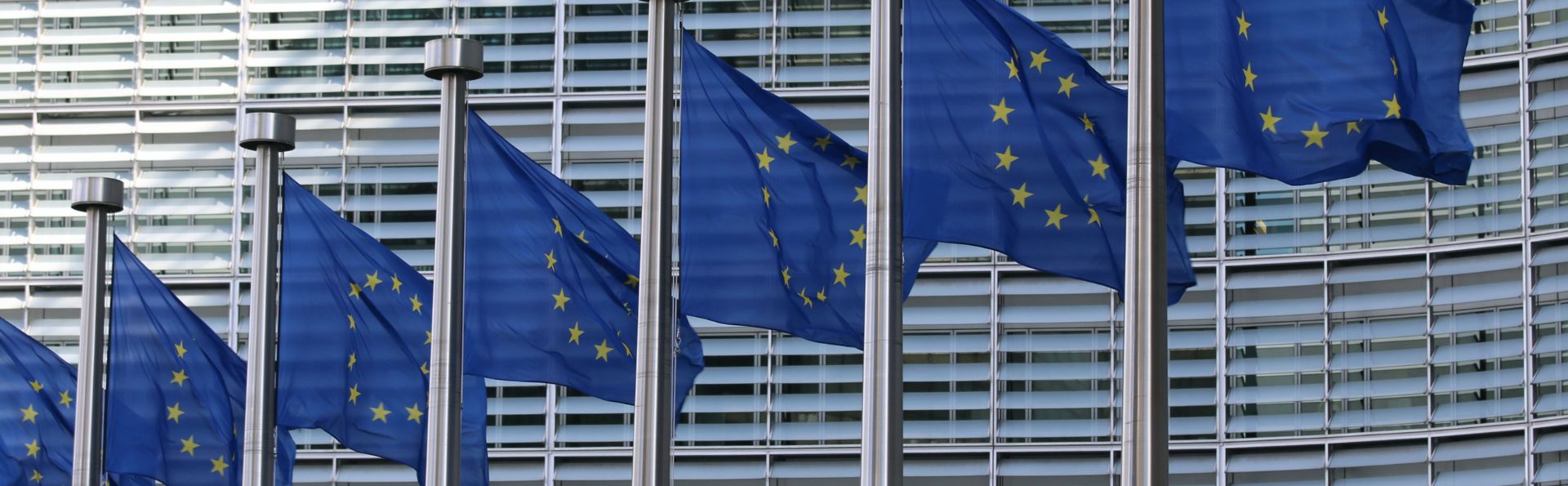
In just a matter of weeks we will know whether it is business as usual or whether we are in to a whole new chapter in our relationship with Europe. As is always the case in these situations both sides tend to exaggerate the benefits of their position and the risks of voting with the opposition. The result is rarely as good or as bad as the proponents would have us believe.
In considering the likely impact of an in or out decision on the logistics industry, it is worth considering how the industry has been affected by our membership of the EU. Perhaps the greatest benefit has been the free movement of goods with minimal administration. This has reduced costs and greatly assisted the development of strategically located warehouses that serve multiple countries. Within Europe, supply chains are now organised to minimise stocking, transport and warehousing costs rather than in response to customs requirements and border delays. National boundaries are no longer the barriers to logistics that they once were. The downside of course is that any disruption crossing the Channel can quickly result in service failure.
Further significant benefits have also arisen as a result of the free movement of labour. The availability of motivated, well educated people willing to accept flexible working conditions has greatly assisted the logistics industry. The use of agency labour and flexible hours contracts has greatly helped warehouse operators flex costs in line with activity. This has been particularly useful as companies have developed home shopping and e commerce activities. Introducing new services is no longer as cost prohibitive as it once was. A more flexible and entrepreneurial labour force has also made a significant contribution to delivery services requiring the use of owner drivers willing to work unsocial hours and prepared to be paid in accordance with the parcels delivered rather than a fixed wage. A quiet revolution has taken place within the delivery industry that has resulted in a level of flexibility that could only have been dreamt of twenty years ago. This level of flexibility has directly contributed to the range of products that can now be purchased on-line and at an affordable cost. High levels of immigration have also helped drive many parts of the economy as a result of the increased demand for housing and consumer goods. Labour flexibility and increased demand have both contributed to current growth rates. In addition, where would we be in building new warehouses without trades people from other EU countries, given the failure of so many parts of industry to invest in apprenticeships for young people?
Whilst EU regulations have impacted on working hours and vehicle emissions, few would argue that such regulation should now be repealed. Safer working conditions and a cleaner environment will remain important whether the UK is in or out of the EU. Whichever way the vote goes, the UK is likely to remain at the forefront of sustainable development and the search for cleaner safer vehicles will continue.
However, whilst EU membership has brought considerable benefits, there have been both disappointments and disadvantages. One of the greatest disappointments has been the failure of the EU to exploit the use of rail to move goods over longer distances. Tonnage moved by train is now lower than 10 years ago. As a result, the Channel Tunnel remains under exploited with regards the movement of trains to freight terminals around the Country resulting in the continuing growth of the movement of freight by road. It would appear that, when it comes to rail, international cooperation is extremely limited and the benefits of rail over longer distances remains an aspiration rather than a reality.
The greatest disappointment however has been the failure to develop UK infrastructure in line with population growth and operational demand. Whilst immigration has provided a flexible labour force that has benefited the development of services the Country has suffered from a chronic lack of road building. As a result many of the benefits of increased flexibility are lost due to increased traffic congestion. Introducing the use of 'hard shoulder' running can only go so far in increasing motorway capacity - at some point new roads have to be built to prevent ever increasing hold ups caused by congestion.
With regards to rail development, HS2 may help business travellers but it is unlikely to provide any real benefit to ease road population when it is eventually completed – and will it have been surpassed by developments in virtual reality conferencing?
The same lack of investment in infrastructure also applies to airports where the UK as a major international hub is now under threat through a failure to make a decision on where to build additional capacity. The airline industry is a major contributor to the economy and the UK cannot afford to lose its place in Europe as an international hub. These are difficult decisions but ones that politicians must take if Britain is to hold its place in the face of ever increasing competition.
Given the imbalance of trade with the EU it is easy to see why it should be possible to negotiate free trade and movement deals with the EU in the event of a Brexit. Imposing restrictions on the movement of goods across Europe is likely to have a greater negative impact on EU manufacturers and transport operators than UK companies. Whilst continuing membership of the EU will continue to provide benefits to the economy it is essential that there is investment in infrastructure that matches population growth.
From a logistics perspective, if the UK is to remain in the EU then the Country has to find the political will to ensure that the infrastructure is developed in line with the operational requirement. If the decision is to exit the EU then it is essential that we negotiate free trade deals that allow the free movement of goods and continue to recognise the benefits of migrants to a flexible labour force.